
Chasing the Spark: Mistaking a Nervous-System Alarm for Attraction
Adam Fistler, Behavioral Systems Analyst ( adam@adamfistler.com )
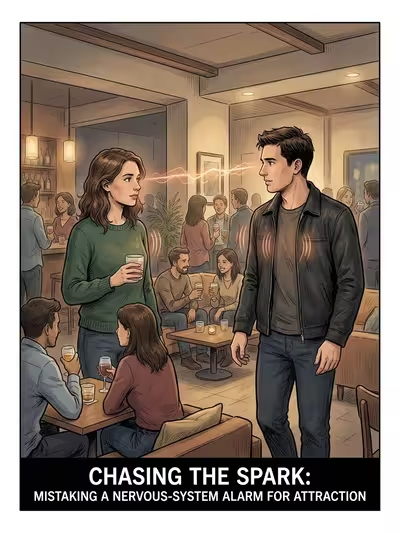
Your pulse quicks, your heart races, and your stomach tenses, you feel butterfiles in your stomach. You feel the inmistkable signs of an inital attaction. But what if the signs that you mistake for attraction are really a nervous-system alarm?
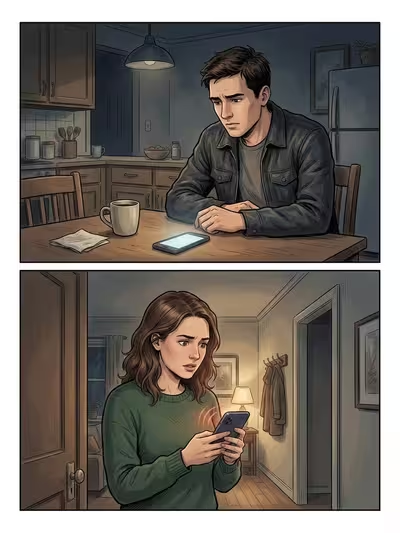
It usually begins in the body before it becomes a story. A person looks at you in a certain way. They answer quickly, then disappear. They become warm, then distant. They reveal just enough to make you believe there is something underneath the distance, something you can reach if you am patient, useful, desirable, or persistent enough.
The chest tightens. Your stomach turns over. You lose sleep. You replay their messages and search their face for evidence. You call it chemistry.
But the body does not know the difference between romantic uncertainty and danger simply because the uncertainty is wearing good clothes.
The system registers a variable reward. Something may be available, but it is not guaranteed. That is enough to begin the chase.
The chase feels like aliveness because it is aliveness. The heart rate rises. Attention narrows. The mind becomes unusually efficient at locating the other person in every thought. The body prepares for action. I experience this mobilization as desire and then build a philosophy around it.
The philosophy is usually simple:
"If I feel this strongly, it must mean something."
It does mean something. But it does not necessarily mean that the person is compatible, safe, available, or capable of love. It may mean that an old system has recognized a familiar pattern.
The Spark Is Not One Thing
Attraction is not a single chemical, and the “spark” is not a reliable measurement of relational quality. It is a temporary convergence of several systems: novelty, reward anticipation, sexual arousal, stress activation, projection, attachment history, and the body’s interpretation of internal signals.
The early attraction system is designed to narrow attention and increase pursuit. It is useful for getting two people close enough to discover whether a bond is possible. It is not designed to evaluate the entire future.
Several chemicals participate in that state.
Phenylethylamine , or PEA, is a naturally occurring trace amine made from phenylalanine. It acts as a short-lived central nervous system stimulant and is associated with heightened energy, focus, arousal, and infatuation. PEA does not equal love. It is closer to an amplifier for novelty and pursuit. It is rapidly broken down in the body, in part through monoamine oxidase-B, which helps explain why its effects are sharp rather than stable.
PEA interacts with the catecholamine systems, especially dopamine and norepinephrine.
Dopamine is not simply the pleasure chemical. It is heavily involved in motivation, salience, learning, and pursuit. It marks something as important enough to approach. Its strongest activity often occurs under conditions of uncertainty: not when the reward is securely possessed, but when the reward might arrive.
This is why an inconsistent person can occupy more mental space than a consistent one. The inconsistent person generates more prediction errors. The brain keeps updating its estimate:
- Maybe they want me.
- Maybe they do not.
- Maybe I said something wrong.
- Maybe they are about to return.
- Maybe this time will be different.
The reward system does not require the person to be good. It requires the outcome to remain unresolved.
Norepinephrine , also called noradrenaline, increases alertness and mobilizes the body. It raises heart rate, sharpens attention, increases vigilance, and strengthens the encoding of emotionally charged memories. It is part of attraction, but it is also part of stress.
That is the first important distinction: the same machinery that makes a person feel intensely interesting can make them feel threatening.
The body does not produce separate heartbeats for passion and fear.
What the Butterflies Are
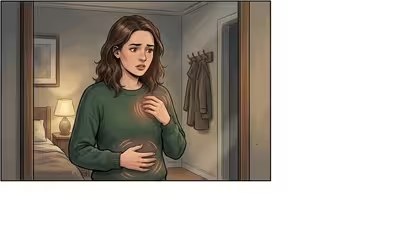
“Butterflies” are often treated as evidence of romantic truth. Physiologically, they are an effect of autonomic activation.
When the brain detects high stakes, uncertainty, novelty, or threat, the sympathetic nervous system shifts the body toward action. Blood flow and energy are redirected away from digestion and toward the muscles, heart, and brain. The digestive system slows. The stomach may feel hollow, tight, nauseated, or fluttering.
The sensation is real. The interpretation is added afterward.
The brain receives internal signals—heart rate, stomach tension, sweating, shallow breathing—and the insular cortex helps convert those signals into a subjective emotional state. This process is called interoception: the perception of the body from within.
If the nervous system has learned that high arousal means love, the body may report fear and the mind may label it chemistry.
This is called misattribution of arousal . The body is activated, and the mind searches for an explanation. If the activated person is attractive, emotionally unavailable, or difficult to read, the explanation becomes romantic:
I feel overwhelmed because this is profound.
Sometimes it is profound. Sometimes the person is simply activating the alarm system.
The HPA Axis and the Chase
When relational uncertainty becomes threatening, the body can activate the hypothalamic-pituitary-adrenal axis , or HPA axis.
The hypothalamus detects a possible threat and releases corticotropin-releasing hormone. The pituitary responds with adrenocorticotropic hormone. The adrenal glands then release cortisol and other stress mediators.
This is a biological emergency system. It exists to prepare the body to respond when something important may be lost or when danger may be approaching.
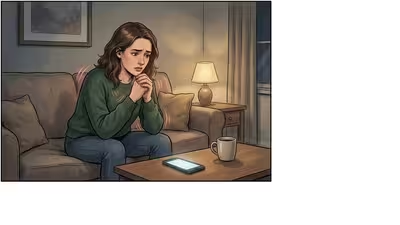
The problem is that emotional uncertainty can keep this system running without producing a clear event that ends the response.
A delayed message becomes a threat.
A change in tone becomes a threat.
A withdrawal of affection becomes a threat.
Contact then functions as relief. The person responds, the body relaxes, dopamine rises, and the mind calls the relief love. But relief from an activated state is not the same as nourishment. The nervous system may be learning that distress is solved by returning to the person who helped produce it.
That is how the loop becomes self-reinforcing:
- Uncertainty activates stress.
- Stress increases attention.
- Attention increases obsession and interpretation.
- A small amount of contact produces relief.
- Relief is rewarded with dopamine.
- The brain learns to pursue the source of the disturbance.
This is intermittent reinforcement. It is one of the most powerful conditioning schedules because the reward is unpredictable. Gambling works through the same general principle. The system does not know when the reward will arrive, so it keeps checking.
The relationship begins to resemble a behavioral addiction without requiring either person to consciously intend harm.
The Psychological Layer: Familiarity Is Not Safety
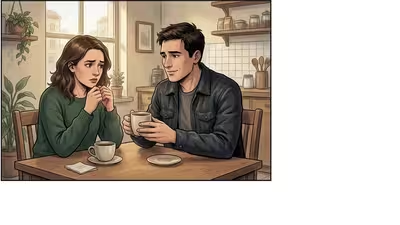
The nervous system is a prediction system. It does not ask only, “Is this good for me?” It asks, “Have I seen this before?”
If earlier relationships, family systems, or formative environments made affection conditional, inconsistent, or difficult to obtain, then pursuit may become associated with intimacy. Love is encoded as something that must be earned. Distance becomes a problem to solve. Availability becomes suspicious because it does not require labor.
The mind often prefers a known form of pain to an unknown form of peace.
This is not because the person wants to suffer. It is because prediction reduces uncertainty. A chaotic relationship can feel familiar enough to be interpreted quickly:
- I chase.
- They withdraw.
- I become more useful.
- They return.
- I feel chosen.
- The cycle repeats.
A stable person breaks the sequence. There is no emergency to solve. No disappearing act requires investigation. No emotional distance needs to be closed through performance.
The system loses its task.
It may call that boredom.
Limerence and the Closed Loop
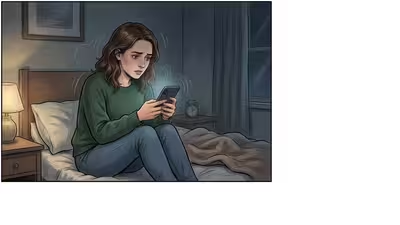
The most intense version of this pattern is limerence: intrusive preoccupation with another person, combined with a powerful need for reciprocation.
The person becomes a central object of mental processing. Small details acquire disproportionate importance. A word, emoji, pause, or social-media activity becomes evidence. The mind builds an internal monitoring process and runs it continuously.
This involves reward learning, threat monitoring, habit formation, and repetitive thought loops. The brain is not merely remembering the person. It is attempting to resolve uncertainty.
Every check asks:
Has the situation changed?
Usually it has not. But checking itself provides a temporary reduction in uncertainty. That relief reinforces the checking.
The solution is not to argue with every thought. The solution is to stop feeding the loop. This may require no contact, removing digital access, stopping social-media surveillance, and interrupting the behaviors that deliver small doses of relief. The nervous system needs the prediction error to extinguish.
A thought can remain present without receiving another action.
Substance Use and the Distorted Baseline
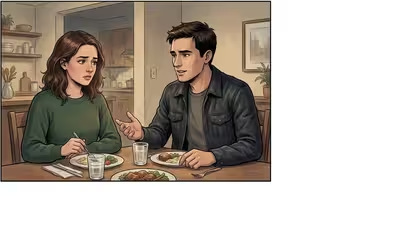
A history of substance use can make this pattern more difficult to interpret.
Many substances produce unusually large changes in dopamine, norepinephrine, endogenous opioids, stress hormones, or related reward systems. Over time, the brain adapts. Receptors and signaling systems change in response to repeated artificial intensity.
The result may include:
- reduced sensitivity to ordinary rewards;
- anhedonia;
- elevated novelty-seeking;
- stress-system instability;
- difficulty experiencing calm as pleasurable;
- increased attraction to high-volatility situations.
This does not mean every person in recovery will experience relationships this way. It means initial feelings may be a poor compass while the brain is recalibrating.
A healthy conversation, a dependable person, and an ordinary evening may produce modest reward signals. They can feel almost invisible beside the intensity of intoxication, withdrawal, conflict, or romantic obsession.
The brain may then seek a relational substitute: the unpredictable person becomes the stimulus, the waiting becomes the anticipation, the reunion becomes the hit.
The substance has changed, but the operating logic remains:
Find intensity. Narrow attention. Pursue relief.
The bonding systems may also feel muted. Oxytocin, vasopressin, and endorphin-mediated comfort do not necessarily disappear, but the ability to register them can be disrupted by chronic stress, substance exposure, withdrawal, depression, sleep disruption, and relational trauma.
This is why a safe partner can feel emotionally absent while an unsafe partner feels chemically vivid.
The vividness is not proof of compatibility. It may be evidence that the reward and threat systems are being activated more strongly than the attachment system.
The Stable Relationship Runs on Different Hardware

A steady relationship is not a relationship without desire. It is a relationship in which desire is not being manufactured by fear.
The initial reward system may still be present, but it is no longer the entire structure. Over time, attachment develops through repeated experiences of reliability, physical affection, mutual responsiveness, vulnerability, shared effort, and repair.
Oxytocin is involved in bonding, social trust, touch, childbirth, nursing, sexual activity, and affiliative behavior. It does not make a person universally safe or guarantee healthy attachment. It is context-dependent. But within a relationship that is already becoming secure, it can support closeness and reduce defensive threat responses.
Vasopressin is also associated with social attachment, pair bonding, territorial behavior, and long-term affiliation. Its role differs across people and species, and it should not be reduced to a simple “commitment chemical.” Human bonding is not controlled by one molecule. It is the product of interacting systems, learning, behavior, memory, and context.
Endogenous opioids , including endorphins, contribute to comfort, pain regulation, and the quiet pleasure of familiarity. They are part of why sitting beside a trusted person can eventually feel satisfying without requiring a crisis, a performance, or a new conquest.
The healthy relationship may feel less like being struck by lightning and more like the body no longer needing to brace.
That can feel strange.
The absence of panic is not emotional emptiness. The absence of obsession is not the absence of desire. The absence of constant interpretation may simply mean the relationship is not demanding emergency-level attention.
What a Healthy Relationship Looks Like

A healthy relationship is not defined by a permanent emotional high. It is defined by a pattern of observable behavior.
There is consistency between words and actions.
You do not have to decode whether you are wanted.
Conflict does not automatically threaten the existence of the relationship.
Both people can say no without retaliation.
Both people retain an identity outside the relationship.
Affection is not used as a reward for compliance.
There is room for sexual desire, play, disagreement, solitude, ambition, and separate friendships.
The relationship can contain discomfort without turning discomfort into catastrophe.
Most importantly, repair is possible.
A healthy relationship will still have rupture. People misread one another. They become tired, defensive, selfish, frightened, or careless. The difference is what happens next.
A rupture is acknowledged. Harm is named without theatrical punishment. Responsibility is taken without requiring the injured person to become a prosecutor. Behavior changes. Contact is restored through evidence, not promises alone.
This is how trust becomes biological. The brain predicts a familiar threat, receives a different outcome, and updates its model.
The old prediction says:
If I am honest, I will be abandoned.
The new experience says:
I was honest. The other person became upset, but they stayed, listened, and repaired.
That discrepancy can help reconsolidate emotional memory. The old pathway does not vanish because someone gave a good explanation. It changes through repeated experiences that contradict the old prediction.
Why Healthy Can Feel Boring
A nervous system accustomed to high arousal may use intensity as its definition of feeling.
Calm has fewer obvious signals.
There is no racing heart to interpret. No urgent message to obtain. No emotional cliff to approach. The body is not flooded with norepinephrine. The HPA axis is not being repeatedly activated. Dopamine is not being delivered in unpredictable spikes.
The mind may conclude:
Nothing is happening.
Something is happening. The system is downshifting.
The first stage of stability may feel like withdrawal. There can be restlessness, doubt, irritability, sleep changes, compulsive comparison, and an urge to create a problem. The person may suddenly notice flaws that were always present but were previously hidden under the excitement of pursuit.
This does not mean every stable relationship is compatible. Sometimes there is genuinely no attraction, no shared value, no sexual interest, or no emotional connection. “Boring” is not automatically a sign of health.
The question is not whether there are butterflies.
The question is what the body is doing over time.
Do I feel more open, curious, and alive as trust develops? Or do I feel consistently indifferent and disconnected?
Do I want to know this person as they actually are, without needing them to withdraw first?
Can desire grow when pressure is removed?
Does the relationship feel peaceful because it is safe, or empty because there is no mutual interest?
These questions require time. The spark demands a verdict immediately. Secure attachment can tolerate data collection.
The Reset
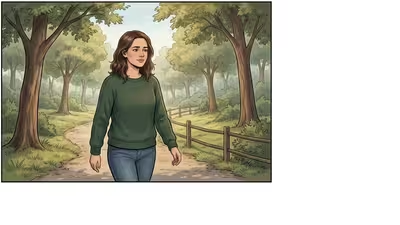
The reset is not a romantic detox in the sense of eliminating all attraction. It is a recalibration of what counts as important.
The goal is to teach the nervous system that intensity is not the only form of reward and that peace is not a defect.
First, stop treating activation as evidence. Name the physical process before assigning meaning:
- My chest is tight.
- My stomach is contracted.
- I am checking my phone repeatedly.
- I slept poorly after their withdrawal.
- I feel relief because they replied.
- I am calling the relief chemistry.
This separates sensation from narrative. The body can be believed without allowing it to become the author of the entire story.
Second, interrupt the reinforcement schedule. Repeated checking, monitoring, testing, and pursuing keep the loop alive. If a relationship is unsafe or abusive, distance and outside support may be necessary. If the pattern is limerence, reducing contact and digital exposure may be the only way to let the reward prediction system settle.
Third, restore the biological basics that make regulation possible:
- consistent sleep;
- regular food;
- physical movement;
- sunlight and time outdoors;
- reduced intoxicant use;
- structured social contact;
- breathing practices that lengthen the exhale;
- time without digital stimulation.
These are not decorative wellness tasks. They lower the amount of noise entering the system.
Fourth, create reward that does not depend on relational instability. Learn, build, exercise, make things, go somewhere unfamiliar, and develop competence. Novelty is not the enemy. The point is to obtain dopamine without requiring another person to become unavailable.
Fifth, learn to remain present during calm. The first response to peace may be an urge to leave. Stay long enough to gather more information, unless there are genuine signs of incompatibility or harm. The system needs repeated exposure to non-catastrophic closeness.
Sixth, use behavior as the primary data source. Do not evaluate a relationship only by how strongly it activates you. Track reliability, accountability, honesty, emotional availability, respect for boundaries, and the capacity to repair.
Seventh, get help where the pattern is larger than willpower. Trauma, attachment injury, depression, ADHD, substance use, and compulsive behavior can all shape how reward and safety are experienced. Therapy, recovery support, medical care, and medication when appropriate are not admissions of failure. They are ways of changing system conditions.
Breaking the Pattern

The pattern breaks when the question changes.
Instead of asking:
How intensely do I want this person?
Ask:
What happens to my mind and body when I am connected to this person over time?
Instead of asking:
Do they make me feel alive?
Ask:
Can I be alive without needing them to destabilize me?
Instead of asking:
Is there a spark?
Ask:
Is there enough attraction, respect, curiosity, and safety to keep collecting honest data?
The goal is not to become numb. It is not to eliminate desire, risk, mystery, or erotic charge. It is to stop confusing injury with depth.
A stable relationship can still contain intensity. It can contain sex, humor, surprise, conflict, ambition, distance, reunion, and the shock of being fully seen. But the intensity no longer depends on abandonment. Novelty can exist without threat. Desire can exist without pursuit. Autonomy can exist without disappearance.
The nervous system can learn a different definition of chemistry.
Not the feeling of being hunted.
Not the relief of being chosen by someone who withheld choice.
Not the obsession produced by an unanswered question.
Something quieter, but not smaller:
A body that does not need to run in order to feel awake.
A mind that does not need to decode love.
A relationship where closeness is not a temporary exemption from danger, but the ordinary condition of being there.
Moving From Mapping the System to Rewiring It
Insight into emotional loops and nervous-system activation is only the first step, as relational conditioning operates largely within the subconscious and autonomic nervous system. My practice combines systems analysis, hypnosis, and behavioral work to help interrupt these automated patterns, rebuild emotional regulation, and restore accurate perception.
If you are ready to address these patterns directly, you can reach out to schedule a consultation.

About The Author
Adam Fistler is a Behavioral Systems Analyst, Board Certified Hypnotist, Certified 5-PATH® Hypnotist, and former owner of the Baltimore Hypnosis Center. A member of the International 5-PATH® Hypnosis Association and certified by the National Guild of Hypnotists, Adam has studied hypnosis, behavior change, and the relationship between thoughts, beliefs, emotions, and behavior for more than two decades.
His perspective is shaped by more than professional training. Adam has also lived through addiction and recovery firsthand across South Jersey and the Philadelphia region, including surviving on the streets of Camden. This gives him a deeply personal understanding of the struggle from both sides: as a practitioner who has helped others create change and as someone who has had to confront his own deeply ingrained patterns and beliefs.
During his own recovery, Adam returned to the principles of hypnosis, mindfulness, self-talk, and behavioral change that he had studied throughout his career. He discovered that recovery could be about more than simply managing cravings or avoiding relapse—it could also be an opportunity to understand the beliefs, emotional patterns, and experiences that had shaped his behavior.
Today, Adam combines his professional experience with the lessons of his own journey to serve clients throughout Greater Baltimore Maryland Region, and beyond, helping others explore the possibility of meaningful, lasting change. His approach is grounded in empathy, curiosity, practical tools, and the belief that people are more than the behaviors they are trying to overcome.
Explore my Addiction & Recovery Resources
Contact Adam Fistler, BCH - Behavioral System Analyst
Examine an Overview of Addiction, Substance Abuse & Recovery
The Slow Descent: How Addiction Hijacks the Mind, Body, and Survival System
Learn more about my Addiction, Substance Abuse & Recovery Services
Discover how Hypnosis aids with Addiction & Recovery
Rethinking Recovery: The Science, Stigma, and Advocacy of The Sinclair Method
Addiction Is Not a Moral Failure: Celebrities and Their Struggles with Addiction
Explore my Addiction & Recovery Articles
Review a List of All My Addiction & Recovery Articles
Neurotransmitters and Neurochemistry in Addiction
Endorphins, Pain, Mood, and Addiction: Understanding the Endogenous Opioid System
Your Addiction Isn't Broken Code - It's Legacy Code
Societal Lockout: When Rebuilding a Life Becomes One Roadblock After Another
The Mechanics of Infidelity: A Neurochemical, Psychological, and Biological Map
Chasing the Spark: Mistaking a Nervous-System Alarm for Attraction