
Endorphins, Pain, Mood, and Addiction: Understanding the Endogenous Opioid System
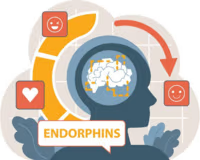
Endorphins are often described as the body’s natural painkillers. That description is accurate, but incomplete. These naturally occurring peptides also participate in stress regulation, mood, motivation, reward, and the brain’s response to physical and emotional discomfort.
Because endorphins interact with the same general opioid-receptor system affected by opioid medications and other opioid substances, it is understandable that people have wondered whether unusually low endorphin activity might contribute to addiction, anxiety, depression, or an increased sensitivity to pain.
The idea is sometimes described as “endorphin deficiency.” It may be a useful way to discuss the endogenous opioid system, but it should be used carefully. At present, “endorphin deficiency” is not a universally accepted, routinely diagnosed medical condition with a single standardized test, definition, or treatment. Addiction is also far too complex to be explained by one biological factor.
Still, understanding the endorphin system can provide valuable insight into how the body regulates pain, stress, pleasure, and recovery.
What Are Endorphins?
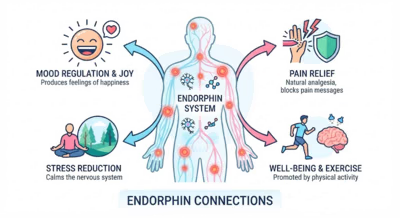
The word endorphin comes from combining endogenous , meaning produced within the body, and morphine . Endorphins are naturally occurring opioid peptides made primarily in the brain and pituitary gland, although related opioid peptides are produced in other parts of the body as well.
They bind to opioid receptors throughout the nervous system. When activated, these receptors can reduce the transmission of pain signals and influence emotional and physiological responses to stress.
Endorphins may be released in response to experiences such as:
- Exercise and sustained physical activity
- Injury or acute pain
- Stress or fear
- Laughter and positive social interaction
- Sexual activity
- Certain forms of meditation and relaxation
- Childbirth
The release of endorphins is part of the body’s natural effort to help a person tolerate discomfort and continue functioning during demanding circumstances.
Endorphins Are Only One Part of a Larger System
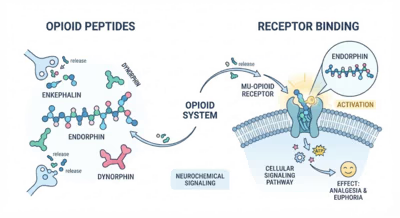
The endogenous opioid system is more complicated than endorphins alone. It includes several families of naturally occurring opioid peptides, including endorphins, enkephalins, and dynorphins. These peptides interact with different opioid receptors, including mu, delta, and kappa receptors.
The effects of this system depend on several factors:
- Which peptide is released
- Which receptor it activates
- Where that receptor is located
- How much of the substance is available
- How long the signal lasts
- What other brain systems are active at the same time
This is why it is overly simplistic to say that a person has “low endorphins” and that this single problem causes addiction. The brain does not operate through isolated chemicals. It operates through interconnected systems involving reward, motivation, learning, stress, pain, emotion, and self-control.
What Does “Endorphin Deficiency” Mean?
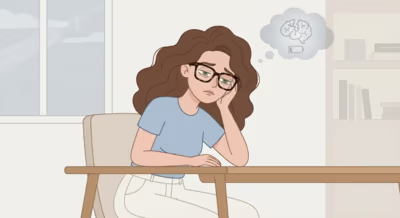
In informal discussions, endorphin deficiency generally refers to the possibility that a person produces too little endogenous opioid activity or does not respond normally to it. This could involve the amount of peptide released, the sensitivity of opioid receptors, the speed at which the body breaks down these chemicals, or the way the opioid system interacts with other neurotransmitter systems.
However, there is no universally accepted clinical definition of endorphin deficiency. A person cannot ordinarily visit a doctor, receive a routine endorphin test, and be given a definitive diagnosis in the same way they might be tested for anemia or diabetes.
For that reason, the term should be treated as a hypothesis or descriptive framework rather than as a proven explanation for every case of addiction, depression, anxiety, or chronic pain.
Possible Signs of Reduced Endogenous Opioid Activity
Researchers have investigated whether differences in endogenous opioid function may be associated with certain experiences or behaviors. These may include:
- Greater sensitivity to physical pain
- Difficulty experiencing pleasure or emotional uplift
- Persistent low or flat mood
- Increased stress reactivity
- Anxiety or emotional discomfort
- A strong desire for quick relief
- Seeking intense exercise, food, alcohol, drugs, or other rewarding experiences
These experiences are not proof of endorphin deficiency. They can arise from many different causes, including chronic pain, trauma, depression, sleep disruption, medical illness, stress, medication effects, and other biological or psychological conditions.
The Connection Between Endorphins and Pain
Endorphins help reduce pain by activating opioid receptors that dampen pain signaling in the brain and spinal cord. This does not mean that people with chronic pain simply lack endorphins. Pain is influenced by inflammation, nerve injury, tissue damage, mood, attention, sleep, past experiences, and the central nervous system’s interpretation of danger.
A person with reduced endogenous opioid activity might experience pain as more intense or might have less of the body’s natural buffer against discomfort. But pain sensitivity is not a direct measure of endorphin levels, and the relationship between endorphins and pain is not simple.
The body’s natural pain-control system can also change over time. Repeated stress, chronic pain, prolonged opioid exposure, and other conditions may affect how the brain responds to opioid signals.
Endorphins and Mood

Endorphins can influence mood, but they are not simply “happiness chemicals.” Their effects are connected to the broader systems that regulate reward, stress, social bonding, motivation, and emotional resilience.
When a person is under prolonged stress or living with depression, anxiety, trauma, or chronic pain, ordinary experiences may stop producing a meaningful sense of reward. This condition is often called anhedonia , or a reduced ability to experience pleasure.
Anhedonia may lead people to seek immediate relief through substances or behaviors that produce a strong change in their internal state. A person may use alcohol, opioids, stimulants, gambling, food, sex, exercise, or other activities not because they are careless, but because they are trying to escape emotional pain or feel something different from the flatness they experience every day.
That does not mean endorphin deficiency causes these behaviors. It means the brain’s natural reward and stress-regulation systems may influence what kinds of relief a person finds compelling.
How Opioids Affect the System
Opioid drugs such as oxycodone, morphine, and heroin activate opioid receptors from outside the body. They can reduce pain and create feelings of relief, warmth, calm, pleasure, or euphoria. Some people may experience unusual energy or emotional elevation rather than sedation.
When opioid receptors are repeatedly activated by an external substance, the brain adapts. These adaptations can include changes in receptor sensitivity, signaling pathways, stress systems, and the body’s own opioid activity. Over time, the person may develop tolerance , meaning that the same dose produces less effect.
The person may also develop physical dependence , in which the nervous system has adapted to the presence of the drug and produces withdrawal symptoms when it is reduced or stopped.
Physical dependence is not identical to addiction. A person can become physically dependent on a prescribed medication without developing compulsive use or losing control. Addiction, or substance use disorder, involves a broader pattern of impaired control, compulsive use, continued use despite harm, and significant disruption to a person’s life.
Why Withdrawal Can Feel So Severe

When regular opioid use stops suddenly, the brain and body must function without the opioid stimulation to which they have adapted. Withdrawal may involve:
- Muscle aches and increased pain sensitivity
- Restlessness and agitation
- Anxiety and irritability
- Sweating and chills
- Runny nose and watery eyes
- Nausea, vomiting, diarrhea, or stomach cramps
- Sleep problems
- Low mood and emotional emptiness
- Strong cravings
The person may feel both physically uncomfortable and emotionally disconnected. Natural pleasure can seem unavailable, while stress and discomfort feel amplified. This can make returning to opioid use seem like the fastest or only way to feel normal.
Withdrawal is not merely a matter of poor attitude or weak character. It reflects real adaptations in the nervous system. At the same time, withdrawal alone does not explain the entire course of addiction. Learning, environment, trauma, habits, access, social relationships, mental health, and personal circumstances all matter.
Endorphin Deficiency and Addiction: What Can and Cannot Be Said
It is reasonable to ask whether a person with lower endogenous opioid activity might be more vulnerable to opioid misuse. A person who experiences low mood, high stress, unusual pain sensitivity, or limited natural reward may find the effects of opioids especially powerful or meaningful.
However, this does not establish that endorphin deficiency is the cause of addiction. People develop substance use disorders for many different reasons, and many people who use opioids do not develop addiction. Conversely, people can develop addiction even when there is no evidence of a pre-existing endorphin problem.
Addiction is best understood as a multidimensional condition involving:
- Genetics and biology
- Brain adaptation and learning
- Trauma and adverse experiences
- Mental health conditions
- Chronic pain
- Stress and social environment
- Availability and patterns of substance use
- Coping skills and emotional regulation
- Family, community, and economic circumstances
The endogenous opioid system may be one piece of this larger picture, but it is not the whole explanation.
Can Endorphin Levels Be Reliably Tested?
Endorphins are difficult to measure in a way that provides a clear picture of what is happening throughout the brain. Measurements taken from blood or other bodily fluids do not necessarily reflect endorphin activity in specific brain regions, and levels can vary depending on timing, stress, physical activity, illness, medication, and the testing method.
As a result, there is no widely accepted routine test that can confirm “endorphin deficiency” as the cause of a person’s mood, pain, or addiction. Anyone claiming to diagnose the condition through a simple test or to explain all addiction through endorphins should be approached cautiously.
Supporting the Body’s Natural Regulation Systems

There is no universally established treatment specifically designed to correct endorphin deficiency. Still, many evidence-informed practices support the broader systems involved in mood, pain regulation, stress, and recovery.
These may include:
- Regular, appropriately paced physical activity
- Consistent sleep and treatment of sleep disorders
- Medical evaluation and treatment of chronic pain
- Therapy for trauma, anxiety, depression, or emotional regulation
- Mindfulness and stress-management practices
- Meaningful social connection
- Nutritious food and regular meals
- Treatment for substance use disorder when needed
- Medications for opioid use disorder, such as buprenorphine or methadone, when clinically appropriate
Exercise may temporarily influence endorphins and other neurochemical systems, but it should not be presented as a cure for addiction or chronic depression. Likewise, meditation, nutrition, and social connection can be valuable supports without replacing professional medical or behavioral treatment.
People using opioids regularly should not attempt to stop abruptly without medical guidance. Withdrawal can be intensely distressing, and a return to use after tolerance has fallen can increase overdose risk. Evidence-based treatment and harm-reduction services can save lives.
A Balanced View
The concept of endorphin deficiency can be meaningful when it helps people understand that pain, mood, stress, and reward are influenced by biology. It may help replace shame with curiosity and encourage people to seek appropriate care.
But the concept becomes harmful when it is treated as a proven diagnosis, a complete explanation for addiction, or a promise that a supplement, diet, or single intervention can restore the brain to normal.
Addiction is not caused by one chemical being too low or too high. Recovery is not achieved by correcting one number. The brain and body change through repeated experience, and they can also change through repeated recovery-oriented experiences: safety, treatment, connection, healthy routines, emotional learning, and time.
The most useful question is not simply, “Do I have an endorphin deficiency?” It is, “What combination of biological, emotional, medical, and environmental factors is shaping my pain, mood, and behavior—and what kinds of support can help me regain control?”
That broader question respects both the complexity of addiction and the possibility of recovery.
Important note: This article is educational and does not diagnose endorphin deficiency or replace medical care. Anyone experiencing addiction, severe depression, chronic pain, or opioid withdrawal should consult a qualified healthcare professional. In the United States, call or text 988 for a mental-health crisis or 911 for an immediate medical emergency.