Neurotransmitters and Neurochemistry in Addiction
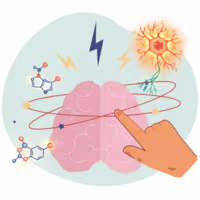
Addiction is often explained with a single sentence: “Drugs increase dopamine.” While dopamine is important, that explanation is incomplete. Addiction involves a complex interaction among neurotransmitters, hormones, brain circuits, learning, memory, stress, pain, emotional regulation, genetics, and a person’s environment.
Understanding this neurochemistry does not remove personal responsibility. Instead, it helps explain why addiction can become so powerful, why stopping can be difficult even when someone sincerely wants to stop, and why effective recovery usually requires more than willpower alone.
What Are Neurotransmitters?
Neurotransmitters are chemical messengers used by nerve cells to communicate. A neuron releases a neurotransmitter into a tiny space between cells called a synapse. The neurotransmitter then binds to receptors on another cell, increasing or decreasing that cell’s activity.
Some neurotransmitters primarily stimulate activity, while others primarily reduce it. Many have several functions depending on where they are active and which receptors they affect.
Important neurotransmitters and related chemical systems involved in addiction include:
- Dopamine
- Serotonin
- GABA
- Glutamate
- Endorphins and other endogenous opioids
- Norepinephrine, also called noradrenaline
- Endocannabinoids
- Acetylcholine and other signaling systems
These systems do not work independently. They continually influence one another.
Addiction Involves Brain Circuits, Not Just Chemicals
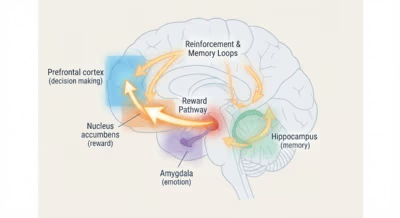
Neurotransmitters are part of larger brain circuits. Several areas are especially important in addiction, including the reward system, the prefrontal cortex, the amygdala, the hippocampus, and stress-related networks.
The reward system helps the brain identify experiences that may be worth repeating. The prefrontal cortex contributes to judgment, planning, impulse control, and decision-making. The amygdala helps process emotional significance and threat. The hippocampus connects experiences with memories, places, people, and situations.
When a substance repeatedly produces powerful relief or pleasure, the brain learns that the substance is important. Eventually, reminders associated with the substance can trigger cravings before the person consciously decides to use.
This is one reason addiction is not simply a series of isolated choices. Repeated substance use teaches the brain powerful associations, and those associations can remain active long after the original reasons for using have changed.
Dopamine: Reward, Motivation, and Learning
Dopamine is one of the neurotransmitters most closely associated with addiction. It plays important roles in:
- Motivation
- Reward learning
- Attention
- Movement
- Anticipation
- Memory formation
- Goal-directed behavior
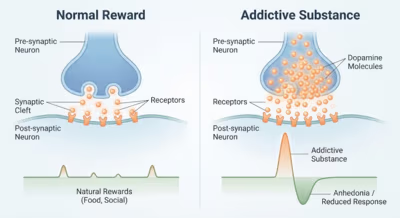
Dopamine is not simply the brain’s “pleasure chemical.” It is more accurate to describe it as part of a system that helps the brain identify what is important and motivates a person to pursue it.
Addictive substances can produce dopamine signals that are faster, stronger, or more reliable than many natural rewards. Over time, the brain learns to prioritize the substance and the circumstances connected to it.
This can create a cycle:
- The substance produces a powerful effect.
- The brain identifies the substance as highly significant.
- Cues associated with the substance trigger anticipation.
- Craving increases motivation to seek it.
- Use temporarily changes the person’s internal state.
- The cycle is reinforced.
With repeated use, natural rewards may feel less satisfying by comparison. Work, relationships, hobbies, food, and ordinary pleasures may seem dull or emotionally distant. This reduced ability to experience pleasure is called anhedonia .
Dopamine does not act alone. Changes in dopamine signaling are influenced by glutamate, stress hormones, opioid systems, serotonin, and many other biological processes.
Serotonin: Mood, Impulse Control, and Emotional Regulation
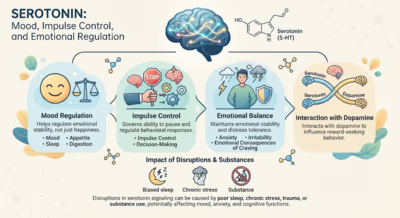
Serotonin, also known as 5-hydroxytryptamine or 5-HT, is involved in mood, sleep, appetite, digestion, pain processing, learning, and impulse control.
People often refer to serotonin as a “happiness chemical,” but that description is too simple. Serotonin helps regulate emotional stability and communication among several brain systems. Changes in serotonin signaling may affect mood, anxiety, irritability, impulsivity, sleep, and the ability to tolerate distress.
Substances that affect serotonin can produce temporary changes in mood or perception. Repeated use may disrupt normal regulation, particularly when substance use is combined with poor sleep, chronic stress, trauma, or an underlying mood disorder.
Serotonin also interacts with dopamine. In some situations, changes in serotonin can alter reward-seeking behavior, impulse control, and the emotional consequences of a craving.
GABA: The Brain’s Main Inhibitory System
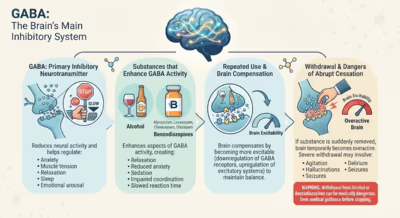
GABA, or gamma-aminobutyric acid, is the brain’s primary inhibitory neurotransmitter. It generally reduces neural activity and helps regulate anxiety, muscle tension, relaxation, sleep, and emotional arousal.
Alcohol and benzodiazepines—including medications such as alprazolam, lorazepam, clonazepam, and diazepam—enhance aspects of GABA activity. This can create relaxation, reduced anxiety, sedation, impaired coordination, and slowed reaction time.
When GABA activity is repeatedly increased by an external substance, the brain may compensate by becoming more excitable. If the substance is suddenly removed, the brain can temporarily become overactive.
This is why withdrawal from alcohol or benzodiazepines can be medically dangerous. Severe withdrawal may involve agitation, hallucinations, delirium, or seizures. Anyone who uses these substances regularly should seek medical guidance rather than stopping abruptly without professional supervision.
Glutamate: Learning, Excitation, and Cravings
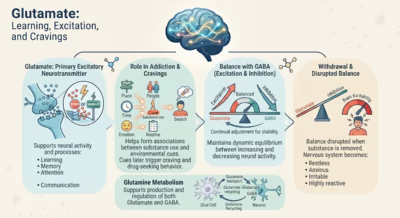
Glutamate is the brain’s primary excitatory neurotransmitter. It supports learning, memory, attention, and communication among neurons.
Glutamate is especially important in addiction because it helps the brain learn associations. Places, people, times of day, emotions, music, routes, or routines can become connected with substance use. Later, those cues may activate craving and drug-seeking behavior even when the person is not consciously thinking about using.
The relationship between glutamate and GABA can be understood as a balance between excitation and inhibition. GABA generally reduces neural activity, while glutamate generally increases it. The brain must continually adjust both systems to maintain stability.
During withdrawal, this balance can be disrupted. The nervous system may become restless, anxious, irritable, over-alert, and highly reactive.
Glutamate is also related to glutamine metabolism. Glutamine acts as a transport and recycling molecule that helps support the production and regulation of glutamate and GABA in the brain.
Endorphins and the Endogenous Opioid System
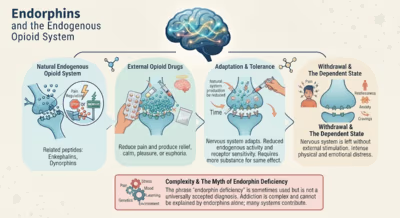
Endorphins are naturally occurring opioid peptides produced by the body. They help regulate pain, stress, mood, and emotional responses. Related endogenous opioid peptides include enkephalins and dynorphins.
Opioid drugs such as morphine, oxycodone, heroin, and fentanyl activate opioid receptors from outside the body. These substances can reduce pain and produce relief, calm, pleasure, or euphoria.
With repeated opioid exposure, the nervous system adapts. The body may reduce its own opioid activity or change receptor sensitivity. The person may then require more of the substance to achieve the same effect, a process known as tolerance.
When opioid use stops, the body may be left without the external stimulation to which it has adapted. Withdrawal can include pain, restlessness, sweating, gastrointestinal symptoms, anxiety, insomnia, low mood, and intense cravings.
The phrase “endorphin deficiency” is sometimes used to describe the possibility of unusually low endogenous opioid activity. However, it is not a universally accepted diagnosis with a single standard test. Addiction cannot be explained by endorphins alone. Pain, stress, mood, learning, genetics, environment, and many other systems also contribute.
Norepinephrine: Alertness and the Stress Response
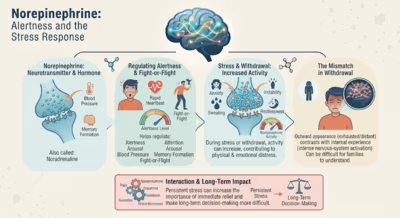
Norepinephrine, also called noradrenaline, functions as both a neurotransmitter and a hormone. It helps regulate:
- Alertness
- Attention
- Arousal
- Blood pressure
- Memory formation
- The fight-or-flight response
During stress or withdrawal, norepinephrine activity can increase. This may contribute to anxiety, irritability, sweating, rapid heartbeat, restlessness, difficulty sleeping, and a feeling that something is seriously wrong.
A person in withdrawal may appear emotionally distant or exhausted while internally experiencing intense nervous-system activation. This mismatch between outward appearance and internal experience can make addiction difficult for families to understand.
Norepinephrine also interacts with dopamine, serotonin, and stress hormones. Persistent stress can increase the importance of immediate relief and make long-term decision-making more difficult.
Endocannabinoids: Internal Stress and Mood Regulation
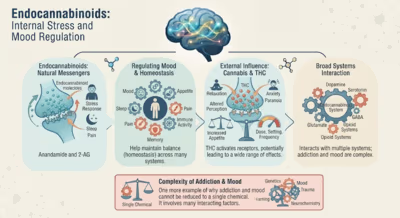
Endocannabinoids are lipid-based chemical messengers produced naturally by the body. The best-known examples are anandamide and 2-arachidonoylglycerol, or 2-AG.
These compounds help regulate mood, appetite, sleep, pain, memory, immune activity, and stress responses. Unlike many neurotransmitters, endocannabinoids often travel backward across the synapse and adjust how much neurotransmitter is released.
Cannabis compounds such as THC can mimic some of the effects of naturally occurring endocannabinoids by activating cannabinoid receptors. Depending on the person, dose, setting, and frequency of use, this may produce relaxation, pleasure, altered perception, increased appetite, anxiety, or paranoia.
The endocannabinoid system interacts with dopamine, serotonin, GABA, glutamate, and opioid systems. It is one more example of why addiction and mood cannot be reduced to a single chemical.
Why Substances Feel Different to Different People
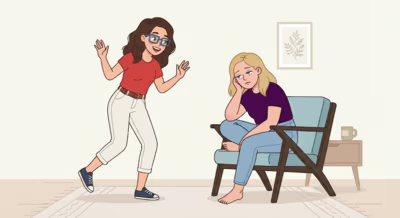
People do not all respond to the same substance in the same way. One person may become sleepy after taking an opioid, while another may feel energized or unusually optimistic. One person may feel relaxed after using cannabis, while another experiences anxiety. A medication that calms one person may produce agitation or unexpected stimulation in another.
These differences may be influenced by:
- Genetics
- Age and physical health
- Previous substance exposure
- Tolerance
- Sleep and stress
- Mental-health conditions
- Other medications or substances
- Expectations and environment
- Differences in metabolism and receptor sensitivity
A paradoxical reaction occurs when a substance produces an effect opposite to what is normally expected. These reactions are real, but they do not by themselves identify a specific neurotransmitter abnormality or prove that a person has a particular deficiency.
Tolerance and Physical Dependence
Tolerance develops when repeated exposure causes a substance to have a reduced effect. The person may need more of the substance or use it more frequently to achieve the effect they once obtained from a smaller amount.
Physical dependence occurs when the body adapts to regular substance exposure. If the substance is suddenly reduced or stopped, withdrawal symptoms can occur.
These processes are biological adaptations, not evidence of moral weakness. Physical dependence can occur with some properly prescribed medications and does not automatically mean that a person has an addiction.
Addiction involves a broader pattern, often including impaired control, compulsive use, continued use despite significant harm, and the substance taking priority over important areas of life.
Psychological Dependence and the Need for Relief
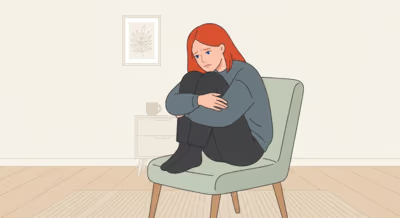
Psychological dependence involves relying on a substance or behavior to manage emotions, stress, pain, boredom, fear, or daily functioning. The person may believe that they cannot cope, sleep, work, socialize, or feel normal without it.
Psychological dependence is strengthened through learning. If a substance repeatedly reduces anxiety or emotional pain, the brain records that relief as important. Cravings may then appear whenever similar distress returns.
This does not mean the person is pretending. The emotional reliance can be intense and physically felt. However, psychological dependence can change through treatment, new coping skills, corrective experiences, social support, and repeated practice.
The Brain During Withdrawal
Withdrawal occurs when the brain and body are trying to function without a substance after adapting to its presence. The specific symptoms depend on the substance, dose, duration of use, health status, and individual biology.
Common experiences include:
- Anxiety and agitation
- Low mood or emotional emptiness
- Sleep disruption
- Muscle aches and pain
- Sweating or chills
- Nausea and digestive problems
- Difficulty concentrating
- Irritability
- Strong cravings
- Increased sensitivity to stress
The person may also experience anhedonia , in which ordinary activities provide little or no pleasure. This can be especially discouraging because the person may want to enjoy family, hobbies, food, or nature but feel emotionally disconnected from them.
Recovery of the brain’s natural regulation systems takes time. Some people improve quickly, while others experience prolonged mood, sleep, or craving problems. Individual recovery is influenced by the substance used, length of use, co-occurring conditions, stress, nutrition, sleep, safety, and treatment access.
Why Relapse Can Happen After Abstinence
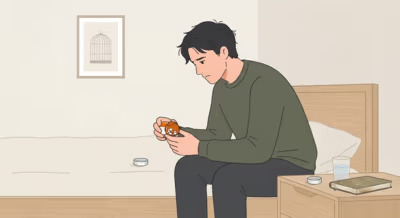
A return to substance use is often called a relapse, although many treatment approaches prefer language such as “return to use.” It may occur after exposure to a cue, a stressful event, emotional pain, overconfidence, physical discomfort, or a belief that one use will be manageable.
Brain associations can remain active even after a period of abstinence. A person may feel stable for weeks or months and then experience a sudden, powerful craving after encountering a familiar person, place, smell, memory, or emotion.
A return to use should be taken seriously, but it should not be treated as proof that recovery is impossible. It can indicate that the person needs additional support, a safer plan, medical treatment, new coping strategies, or a different recovery approach.
Because tolerance may decrease during abstinence, returning to a previously familiar dose can also increase overdose risk. Harm-reduction education, naloxone access, and evidence-based treatment are important parts of saving lives.
Neurochemistry Does Not Eliminate Responsibility
Explaining addiction through brain chemistry does not mean a person has no responsibility for their actions. It means that responsibility must be understood within the reality of biology, learning, stress, and behavior.
A person may be responsible for seeking help, protecting others, being honest, repairing harm, and making safer choices. At the same time, shame and punishment alone do not restore neurotransmitter balance, erase cravings, or teach new coping skills.
A more useful approach combines accountability with treatment and compassion. People need consequences when necessary, but they also need accurate information, medical care, psychological support, and realistic opportunities to change.
Treatment and Recovery
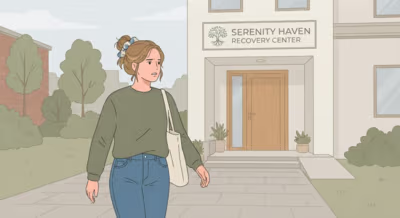
Because addiction involves multiple systems, effective treatment may require multiple forms of support. Depending on the substance and the individual’s circumstances, treatment may include:
- Medical evaluation
- Medications for opioid use disorder, such as buprenorphine or methadone
- Medically supervised withdrawal management
- Counseling and psychotherapy
- Cognitive behavioral therapy
- Dialectical behavior therapy
- Trauma-informed care
- Contingency management
- Recovery groups and peer support
- Mindfulness and stress-regulation skills
- Sleep, nutrition, and physical-health support
- Harm-reduction services
No single recovery pathway works for everyone. Twelve-step programs help many people, while others benefit from approaches such as SMART Recovery or other secular, skills-based, medication-supported, or individualized models.
The goal is not simply to force the brain to stop wanting a substance. The goal is to help the person build a life in which safety, connection, meaning, competence, and healthy rewards become more available than the substance was.
Recovery and Neuroplasticity
The brain is adaptable. This ability to change is called neuroplasticity . Addiction reflects one form of repeated learning and adaptation, but recovery can involve new forms of learning and adaptation as well.
Over time, healthy routines and supportive experiences can strengthen alternative pathways. The brain can learn to tolerate discomfort, delay impulses, recognize triggers, experience natural rewards, and respond to stress in new ways.
Recovery is rarely a straight line. Sleep may improve before mood. Cravings may decrease while anxiety remains. A person may understand what to do but still need repeated practice before new behavior becomes automatic.
Progress is not measured only by whether someone experiences a craving. It can also be measured by how they respond to it, how quickly they seek support, how honestly they communicate, and how much control they regain over their choices.
Conclusion
Neurotransmitters and neurochemistry help explain why addiction can affect motivation, pleasure, pain, stress, memory, judgment, and behavior. Dopamine contributes to reward learning, but it is only one part of a much larger network. Serotonin, GABA, glutamate, endorphins, norepinephrine, endocannabinoids, hormones, and brain circuits all contribute to the experience of substance use and recovery.
Addiction is neither a simple chemical imbalance nor a simple moral failure. It is a complex condition shaped by biology, learning, emotional experience, environment, and personal history.
Understanding the science should lead to better treatment and less stigma. It should also encourage realistic expectations: the brain can change, but meaningful recovery usually takes time, support, repeated practice, and an approach suited to the individual.