
Confidence Is Not a Feeling: Understanding the Architecture of Confidence
Author: Adam Fistler, Behavioral Systems Analyst ( adam@adamfistler.com )
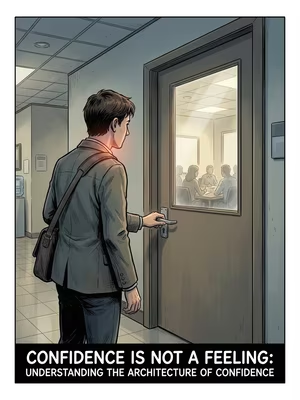
Standing outside of a room, your hand on the door handle, you feel your pulse strike against the inside of your throat. The room contains nothing physically dangerous: fluorescent lights, cheap carpet, and server people sitting behind a table. But non the less, your body has already classified the situation as a threat.
You find that your palms are wet, your shoulders have moved upwards without permission, your breathing has become shallow and fast. Your attention has narrowed to the small details of the chair, the pressure of your shoes against the floor, and the possibility of saying something stupid.
To you, it seems like a lace of confidence, but internally, it is a prediction system running with incomplete data.
Your nervous system does not wait for certainty before acting. It estimates. It compares the present environment with stored patterns and asks a crude question: What happened last time? If the previous answer involved humiliation, rejection, punishment, abandonment, or loss of control, the brain may assign a high probability to danger even when the current situation is objectively safe.
Your heart rate increases, blood flow shifts, your muscles tighten. Digestion becomes secondary. Your attention searches for a threat. The amygdala participates in this rapid detection, while the hypothalamus helps activate the sympathetic nervous system and the hormonal stress response. Adrenaline arrives before philosophy does.
This is not weakness. It is an old biological process operating with limited data.
The problem is that the system can continue treating old conditions as current conditions.
Confidence Is a Prediction
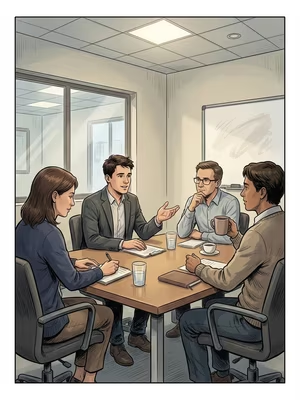
Confidence is commonly viewd as a personal quality, as if some people are issued a larger quantity at birth. That explanation is convenient but incomplete.
A more useful definition is:
Confidence is the brain’s estimate that you can act, adapt, and survive the consequences of uncertainty.
This estimate is built from evidence.
Not affirmations. Not posture alone. Not pretending to be invulnerable.
Evidence.
Every time you perform an action, receive a result, and update without collapsing, your nervous system records information. The action may be small: making a phone call, entering a room, stating a preference, asking a question, finishing a task, tolerating an awkward pause. Your brain does not necessarily care whether the event was impressive. It cares whether the event produced usable data.
You say something imperfectly and are not destroyed.
You make a mistake and repair it.
You experience rejection and remain physically present.
You feel fear and act without waiting for fear to disappear.
These events modify your internal model.
In computational terms, confidence is partly a running estimate. Your system observes an outcome and compares it with its prediction. The difference is a prediction error.
If your brain predicts, You will speak and everyone will reject you , but you speak and the room remains intact, the prediction error is informative. If this happens repeatedly, the old model loses authority.
Your nervous system learns through exposure to reality, not through arguments conducted entirely inside your skull.
The Body Often Decides First

Body arousal may be interpreted as proof of psychology incapacity.
A rapid beating heart may be interpreted as being unsafe.
Shaking hands may cause you to believe you are failing
A blank mind, or inability to find something to say, may lead you to think you are unintelligent.
This is a category error.
Arousal is not a verdict. It is a state.
The same physiological activation can occur during fear, anger, excitement, exertion, anticipation, or sexual attraction. The body increases energy availability; the mind assigns meaning. That meaning depends on context and prior learning.
The sensation of a pounding heart is data. The conclusion— You cannot do this —is an interpretation layered on top of the data.
Neurochemically, the situation is not simple. Stress hormones such as adrenaline and cortisol alter attention, memory retrieval, and motor control. Moderate arousal can improve performance by increasing alertness. Excessive arousal can narrow attention and disrupt working memory. When the prefrontal cortex is overloaded, complex reasoning becomes harder. You may know what to say but lose access to it under pressure.
This does not prove a character defect. It describes a system under load.
A computer with insufficient memory does not become morally inferior because a large process causes the interface to freeze. It needs less load, more capacity, better configuration, or a different operating procedure.
The same logic applies to your nervous system.
Fear Is Not the Opposite of Confidence

Confidence is not the absence of fear. It is a different relationship to fear.
Fear says: Stop. Gather more information. Reduce exposure.
That instruction can be useful when danger is real. It becomes destructive when your system applies it to every uncertain social or psychological event.
Avoidance provides immediate relief. That relief is biologically important because it reinforces the behavior. Your brain learns:
- A threatening situation appears.
- You escape.
- Anxiety decreases.
- Escape becomes more likely next time.
This is negative reinforcement. The behavior strengthens because it removes an unpleasant state.
Avoidance is therefore not irrational in the short term. It works.
That is why it becomes difficult to remove.
The cost arrives later. Each escape prevents you from collecting contradictory evidence. Your nervous system never learns that the situation could have been tolerated. The original prediction remains untested, and untested predictions become myths.
The command is simple:
if anxiety > threshold:
              escape()
              relief = true
The system does not ask whether escape served your larger interests. It records only that escape reduced immediate distress.
This is how a protective adaptation becomes a prison without ever becoming meaningless.
Shame Corrupts the Diagnostic Process

Shame makes fear harder to update because it turns a state into an identity.
Fear says:
Something in this situation may be dangerous.
Shame says:
You are the dangerous or defective thing.
Once fear becomes identity, every failure appears to confirm the same theory. You no longer evaluate an event. You evaluate your existence.
A nervous pause becomes proof of incompetence.
A rejected application becomes proof of worthlessness.
A relapse becomes proof that change was fraudulent.
A social mistake becomes proof that other people have correctly identified a permanent flaw.
This interpretation is psychologically efficient but logically poor. It compresses many variables into one absolute conclusion. It ignores sleep, stress, trauma, skill level, context, timing, illness, social power, and random chance.
The brain prefers coherent explanations, even inaccurate ones. A single negative identity can feel more manageable than a complex system with multiple causes.
But a clean explanation is not automatically a true explanation.
Confidence requires restoring the distinction between what happened and what the event means .
What happened may be:
- You avoided the conversation.
- You spoke too quickly.
- You made an error.
- You were rejected.
- You did not prepare.
- You became overwhelmed.
- You returned to an old behavior.
The meaning is a separate process.
The meaning can be revised.
Confidence Is Built Through Contact

The most reliable path to confidence is contact with reality.
Not total exposure. Not theatrical bravery. Controlled contact.
You identify the behavior that fear is preventing and reduce it to a tolerable unit. The unit must be large enough to produce information and small enough to complete.
If making a phone call feels impossible, your first step may be writing the number down. Then listening to the voicemail greeting. Then calling without needing to explain everything perfectly.
If speaking in groups feels impossible, your first step may be asking one factual question. Then making one short statement. Then remaining in the room after the statement is made.
If creative work feels dangerous because judgment is expected, your first task may be producing something that no one else sees.
The goal is not immediate comfort. The goal is accurate data.
Each completed action sends a signal:
The predicted catastrophe did not occur, or it occurred and remained survivable.
This is how the nervous system updates. Repetition matters because one event can be dismissed as an exception. A pattern is harder to ignore.
The brain changes through plasticity: networks that are repeatedly activated become easier to activate. This applies to avoidance, self-criticism, vigilance, and courage. Confidence is not merely a belief held in language. It is a trained probability encoded across attention, memory, emotion, and action.
What you rehearse becomes available.
The Role of Dopamine

Dopamine is often reduced to the chemical of pleasure. That description is too crude. Dopamine is heavily involved in motivation, learning, salience, and the anticipation of outcomes.
When you act and receive a useful result, dopamine helps mark the event as relevant. Your brain learns which behaviors are worth repeating.
This creates a difficult conflict. Immediate avoidance may produce a rapid reduction in anxiety, which is itself reinforcing. Long-term confidence usually requires delaying that relief and allowing yourself to experience completion instead.
Your nervous system may not reward the correct behavior immediately. It may reward escape first.
This is why confidence-building can feel unpleasant at the beginning. Your system is being asked to abandon a behavior that has successfully reduced distress, even if that behavior has damaged your life over time.
There is no need to romanticize this process. It can feel like withdrawal from a familiar regulation strategy.
You are not simply “thinking positively.” You are changing reinforcement patterns.
Competence Matters More Than Performance
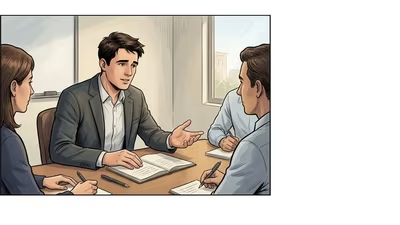
Confidence is often confused with looking confident.
Looking confident is a social display. Confidence is a functional relationship with action.
You can speak loudly, maintain eye contact, and display certainty while being internally dependent on constant approval. You can also speak quietly, show visible nerves, and still possess a stable capacity to act.
Performance asks:
Did you appear impressive?
Confidence asks:
Did you remain capable of responding?
The second question is more durable.
True confidence includes recovery. It includes the ability to correct a mistake without converting the correction into self-annihilation. It includes changing plans when the data changes. It includes saying, “You do not know.” It includes refusing tasks that are unsafe, exploitative, or misaligned.
Arrogance often tries to eliminate uncertainty by claiming superiority. Confidence accepts uncertainty and maintains function inside it.
This is why confidence does not require believing that you will succeed. It requires believing that you can obtain more information and respond to the result.
That is a smaller claim. It is also more defensible.
The Past Is Not a Command

You may have learned helplessness through repeated experiences in which effort did not change the outcome. When action repeatedly fails to produce control, the organism reduces action. This is not laziness in any useful biological sense. It is an energy-conservation strategy built from observed history.
If your system has learned that speaking results in punishment, silence becomes efficient.
If asking for help has repeatedly produced rejection, self-containment becomes efficient.
If ambition has led to humiliation, low expectations become efficient.
The adaptation can remain active after the environment changes. Biology is conservative. It prefers a familiar error to an expensive experiment.
But history is not a command line.
It is input.
The old system may still be running because no one has supplied enough new information to justify shutting it down. The solution is not to insult the process. The solution is to introduce controlled counterevidence.
observe_old_prediction()
          perform_small_action()
          record_actual_outcome()
          update_model()
          repeat()
No mystical transformation is required.
The system must be given a reason to change.
Confidence Without Self-Deception

Radical confidence does not require declaring yourself exceptional. It does not require pretending that every failure is secretly success. It does not require manufacturing admiration for yourself.
It requires accurate accounting.
- You may be inexperienced.
- You may have poor habits.
- You may have damaged relationships.
- You may lack discipline in certain areas.
- You may have made decisions that produced predictable consequences.
- These facts can be recorded without converting them into a permanent sentence.
- Self-respect is not the refusal to see defects. It is the refusal to treat defects as sacred.
You can say:
- You are bad at this right now.
- You avoided preparation.
- You need more repetition.
- You acted from fear.
- You harmed someone and need to repair what you can.
- You cannot control whether you are accepted.
- You can control whether you continue collecting better evidence.
This is not motivational language. It is system maintenance.
The Physical Practice
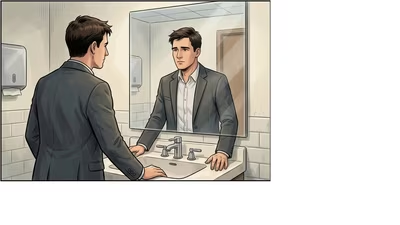
Confidence must eventually leave the abstract layer and enter your body.
Sleep affects emotional regulation and executive function. Movement changes arousal and improves access to cognitive control. Regular food stabilizes energy availability. Breathing patterns influence autonomic state. Repeated routines reduce the number of decisions required under stress.
None of this solves a life by itself. It changes the conditions under which your brain attempts to solve problems.
A sleep-deprived nervous system is more likely to interpret ambiguity as threat. A chronically stressed body has less capacity for flexible attention. You may mistake exhaustion for personal inadequacy when your body is operating under sustained physiological depletion.
Your body is not separate from confidence. It is the hardware through which confidence is expressed.
This is not an excuse. It is an inventory.
The Final Definition
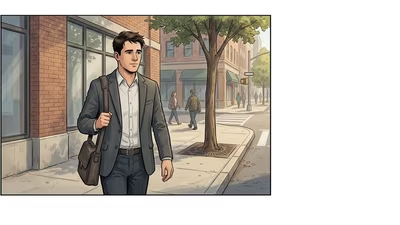
Confidence is not a mood that descends upon the worthy.
It is not a gift given to people with attractive faces, smooth voices, wealthy parents, undamaged histories, or naturally quiet nervous systems.
Confidence is accumulated evidence that action is possible, uncertainty is survivable, and mistakes can be processed without total system failure.
Sometimes the evidence is physical:
- You walked into the room.
- You stayed after your voice shook.
- You made the call.
- You admitted the error.
- You began again without pretending the previous failure did not happen.
Sometimes the evidence is microscopic. No audience sees it. No one applauds. Your nervous system records it anyway.
That record matters.
The old fear may remain. Old patterns do not vanish because you have adopted a better philosophy. But your system can be retrained through repeated contact with reality. Your body can learn that the present is not identical to the past. Your mind can learn that uncertainty is not automatically a verdict. Your behavior can become evidence against the predictions that once controlled you.
Confidence is therefore not the feeling that danger is absent.
It is the growing knowledge that, even when danger, rejection, embarrassment, or failure appears, you are not required to disappear.
The task is not to become fearless.
The task is to become operational.
Moving From Mapping the System to Rewiring It
Understanding the mechanics of prediction errors, arousal misinterpretation, and avoidance reinforcement removes the mystery—but insight alone lives in the conscious mind, while threat conditioning lives in the autonomic nervous system and subconscious prediction loops. You cannot think or willpower your way out of a nervous system that has been trained to treat uncertainty as immediate danger, or identity as a fragile verdict.
My work focuses on the underlying architecture of human behavior—integrating systems analysis, hypnosis, and behavioral conditioning to interrupt these automated feedback loops at the root. Whether you are trying to dismantle chronic hesitation, separate past shame from present capability, or recalibrate a nervous system stuck in freeze and hypervigilance, the goal is not comforting platitudes or artificial hype. It is restoring accurate perception, autonomic regulation, and genuine personal agency.
If you are looking for an immediate, practical field guide to breaking through hesitation, reducing fear and freeze responses, and acting without chasing adrenaline, view the handout from my previously presented workshop: The Architecture of Real Confidence: Stop Chasing Hype and Build Unbothered Security.
If you recognize your own operating patterns in this map and are ready to do the structural work to change them, reach out to schedule a consultation.

About The Author
Adam Fistler is a Behavioral Systems Analyst, Board Certified Hypnotist, Certified 5-PATH® Hypnotist, and former owner of the Baltimore Hypnosis Center. A member of the International 5-PATH® Hypnosis Association and certified by the National Guild of Hypnotists, Adam has studied hypnosis, behavior change, and the relationship between thoughts, beliefs, emotions, and behavior for more than two decades.
His perspective is shaped by more than professional training. Adam has also lived through addiction and recovery firsthand across South Jersey and the Philadelphia region, including surviving on the streets of Camden. This gives him a deeply personal understanding of the struggle from both sides: as a practitioner who has helped others create change and as someone who has had to confront his own deeply ingrained patterns and beliefs.
During his own recovery, Adam returned to the principles of hypnosis, mindfulness, self-talk, and behavioral change that he had studied throughout his career. He discovered that recovery could be about more than simply managing cravings or avoiding relapse—it could also be an opportunity to understand the beliefs, emotional patterns, and experiences that had shaped his behavior.
Today, Adam combines his professional experience with the lessons of his own journey to serve clients throughout Greater Baltimore Maryland Region, and beyond, helping others explore the possibility of meaningful, lasting change. His approach is grounded in empathy, curiosity, practical tools, and the belief that people are more than the behaviors they are trying to overcome.
Explore my Hypnosis Resouces
Contact Adam Fistler, BCH - Behavioral System Analyst
Examine a Brief Overview Hypnosis
Learn how Hypnosis Works Under the Hood & How it Physically Affects the Brain
Learn more about Hypnosis Services & Common Issues People use Hypnosis to Address
Learn how Others have Benefited from my Hypnosis Experience by Browsing Client Testimonials
Discover how Hypnosis can Help You Release Anger, Impulsivity, and Road Rage.
Discover how Hypnosis aids with Addiction & Recovery
Discover how Hypnosis can Help you Lose Weight, Manage Cravings, and Overcome Emotional Eating.
Explore my Hypnosis Articles
Review all my Hypnosis Articles
Baltimore Hypnosis Center: A Journey of Personal and Professional Transformation
10 Things to Consider When Choosing a Hypnotist
10 Ways Hypnosis Can Help You Lose Weight
Attract Your Ideal Partner by Focusing Your Mind
Unlocking Freedom from Chronic Pain: Harnessing the Power of Hypnosis
The Essence of Change: Empowering Transformation Through Hypnosis
Should You Use Hypnosis to Lose Weight?
Should You Use Hypnosis to Stop Smoking?
Breaking Free: The Nice Guy's Journey to Authenticity
Winning the Battle Within: Overcoming the Urge
Debunking Hypnosis Myths: Unveiling the Truth Behind Common Misconceptions
Unlocking Wellness: The Profound Influence of the Mind-Body Connection in Healing
Exploring the Subconscious Mind: Unveiling the Depths of Your Mental Landscape
Exploring the Benefits of Gratitude Practices
The Surprising Link Between Hypnosis and Stress Reduction: A Comprehensive Guide
Gnsotic Aeon Pairings: The Pleroma as a Psychology of Becoming
Confidence Is Not a Feeling: Understanind the Architecture of Confidence
Discussion